
Justice
Risk of the Gallows In a Broken System
My J6 awakening and why I now reject the death penalty
President Trump has made expanding the death penalty a priority through executive orders. I support President Trump on most issues, but this is one where I respectfully disagree.
It probably won't surprise anyone that after four years in the Army followed by twenty-four years in law enforcement, I developed a conservative, no-nonsense, "tough on crime" view of our criminal justice system.
I remain conservative in my political beliefs and continue to support President Trump. But my views of the justice system, particularly at the federal level, have become far more nuanced over time. My position on capital punishment is one of the areas that has changed the most.
As a young husband and father, I was a typical Reagan Republican. If Ronald Reagan and other leading conservatives of the 1980s supported a policy, I was usually on board, including when it came to criminal justice and the death penalty.
I began my law enforcement career in 1986 immediately after being discharged from the Army. My already conservative views became even more firmly pro-law enforcement and pro-prosecution. At the time, I believed only bleeding-heart liberals opposed the death penalty.
But as the years passed, I paid closer attention to the criminal justice system itself rather than simply accepting the prevailing political arguments. One fact became increasingly obvious: a punishment carried out ten or twenty years after a crime has been committed is not much of a deterrent at all, particularly for psychopaths or those acting irrationally to begin with.
Then came the Robert Alton Harris case in California. In 1992, Harris received four separate last-minute stays of execution. On one occasion, after a previous stay had been lifted, he was strapped into the gas chamber and fully prepared for execution. Just two minutes after the last stay was vacated, another stay was issued (yes, you read that right - two minutes). He was removed and returned to his cell.
The victim's family and other witnesses endured this bizarre emotional roller coaster right alongside Harris, fourteen years after the murders had occurred. Instead of bringing closure, the process prolonged their suffering. This case, combined with the extraordinarily lengthy appeals process, left me genuinely conflicted about the death penalty, but still more or less supportive.
When I later learned that pursuing capital punishment costs taxpayers substantially more than sentencing someone to life without parole, my views shifted a little further toward opposition. Still, whenever I heard about an especially horrific murder, I found myself wanting vengeance, just as most people do.
Then came the botched executions. In 2014, three executions by lethal injection went horribly wrong. These occurred in Oklahoma, Arizona, and Ohio. The condemned men writhed, gasped, convulsed, choked, and struggled for extended periods before dying. In Arizona, Joseph Wood took nearly two hours to die.
I found myself asking what this says about us as a people in that we can humanely euthanize hundreds of thousands of animals every year, yet we somehow fail to provide a relatively painless death during an execution?
Those incidents left me feeling disgusted with the process. They pushed me to question the death penalty further, leaving me even less supportive and more ambivalent - wishy-washy, indeed.
Then came the 2020 election, and with it a return to red-hot anger over what I believed was a successful coup of a presidential administration through an obviously fraudulent election. I made public comments stating that those responsible needed to be sent to prison, and that the most culpable, at the highest levels, should face the death penalty for treason. I felt no ambivalence then, did I? Those comments were replayed endlessly by the government and mainstream media to portray me as a domestic terrorist. Ironically, some on the left viewed J6ers such as myself as traitors who should be subjected to the death penalty.
And then came the four-year odyssey of investigation, indictment, trial, and prison. It was this painful journey that placed me solidly in the anti-death penalty camp and willing to speak publicly about the issue.
My experience fundamentally changed the way I view the federal criminal justice system. I personally witnessed an incredibly flawed, biased, weaponized, and corrupt system. Whether people agree or disagree with my assessment of my own case is almost beside the point. What changed was my realization that prosecutors, juries, judges, politics, media deception, and institutional incentives are all capable of producing outcomes that are deeply flawed and unjust.
Once you experience that firsthand, you stop viewing the justice system as infallible, or even trustworthy. In prison, I often found myself staring at a concrete wall thinking about the old legal maxim: "It is better that one hundred guilty people go free than that one innocent person be convicted." For most of my life I thought that principle sounded noble. I truly believed our system of justice was the best.
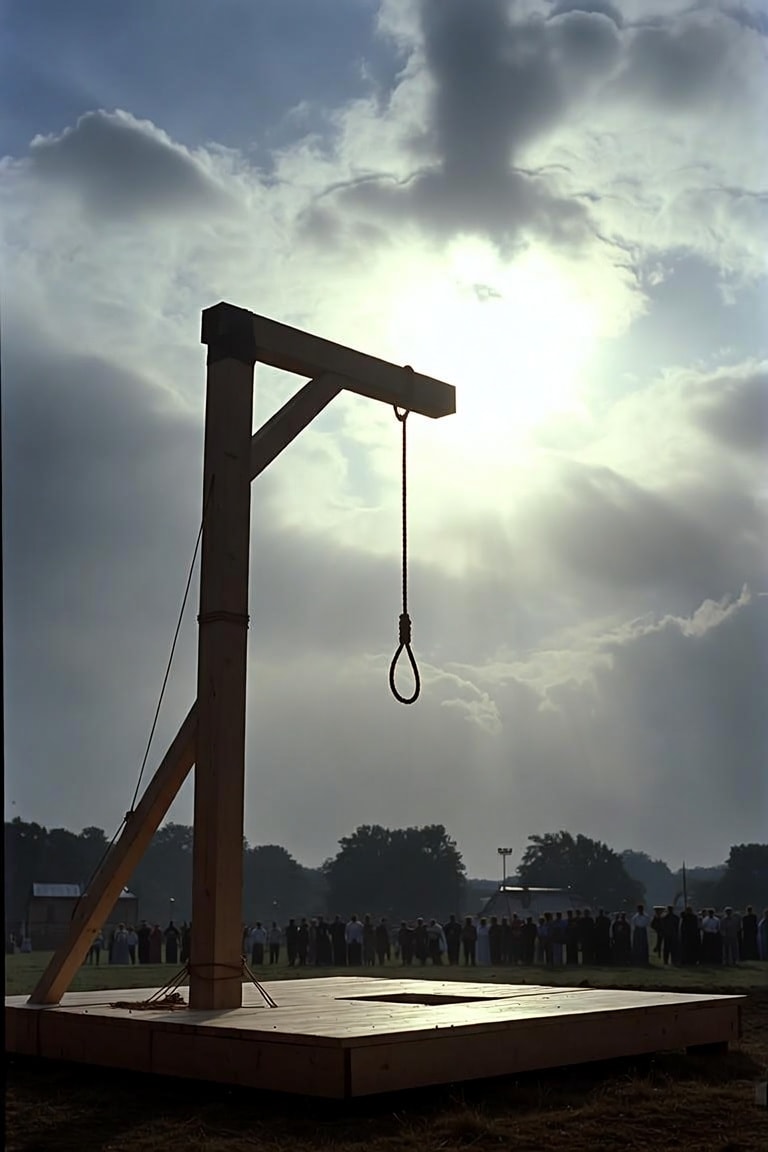
After prison, I understood it differently. Our system of justice is corrupt, harsh, robotic and seems designed to create and fill up more prisons rather than administer "justice." The death penalty is unlike any other punishment because it cannot be undone. A wrongful conviction followed by years in prison is tragic. A wrongful execution is irreversible.
Since 1989, thousands of convicted individuals have been exonerated in the United States. Hundreds of those exonerations have come through DNA evidence alone, with the average exoneree spending roughly fourteen years behind bars before being cleared. That reality should give every American pause, regardless of which political party you claim.
So here is my appeal, especially to my fellow conservatives who are typically predisposed to supporting the death penalty. Supporting the death penalty often comes from an understandable place. When we hear about an unspeakably brutal crime, our first instinct is vengeance. I have felt that instinct myself more times than I can count. I still do. But public policy shouldn't be driven by our worst and most primal instincts.
The death penalty does not meaningfully deter violent crime. It is generally more expensive than life imprisonment. It prolongs the suffering of victims' families through decades of appeals. It carries the unavoidable risk of executing an innocent person.
And contrary to what many people assume, death is not necessarily the harshest punishment. After spending a year in federal prison, I can tell you that incarceration is its own kind of living hell. I was housed in a low-security federal prison, and even there the isolation, monotony, and loss of freedom were profoundly difficult. Maximum-security prisons are even worse. A person sentenced to life without parole faces decades of confinement, aging behind concrete walls with little hope, little sunlight and fresh air, few privileges, and no meaningful freedom.
If I were twenty-five, convicted of murder, and told I could either take a relatively quick execution or spend sixty years growing old and isolated in a supermax prison, I'd take the needle every time.
I realize that sounds harsh. But it taps into something we don't like to admit - the death penalty is mostly about our desire for payback. Politicians and the media know this, and they use it to keep the fires burning on this issue. We can put this fire out. The downside is too high, the upside too little. The risk of killing the wrong person is real. That's why I now believe we should do away with the death penalty - and the sooner the better.